
President Trump began his Asia tour with major Trump Asia Trade Deals, signing agreements with Malaysia, Thailand, and Cambodia to boost trade and counter China’s influence.
Trump Asia Trade Deals: Agreements in Southeast Asia
Within hours of his arrival, Trump presided over multiple signing ceremonies. These involved trade, investment, and border peace initiatives.
In Malaysia, he announced a strategic trade framework. It focuses on critical minerals, manufacturing, and export regulations. The deal aims to ensure U.S. industries gain access to key materials like nickel, cobalt, and rare earths. These resources are vital for electric vehicles, defense, and technology production.
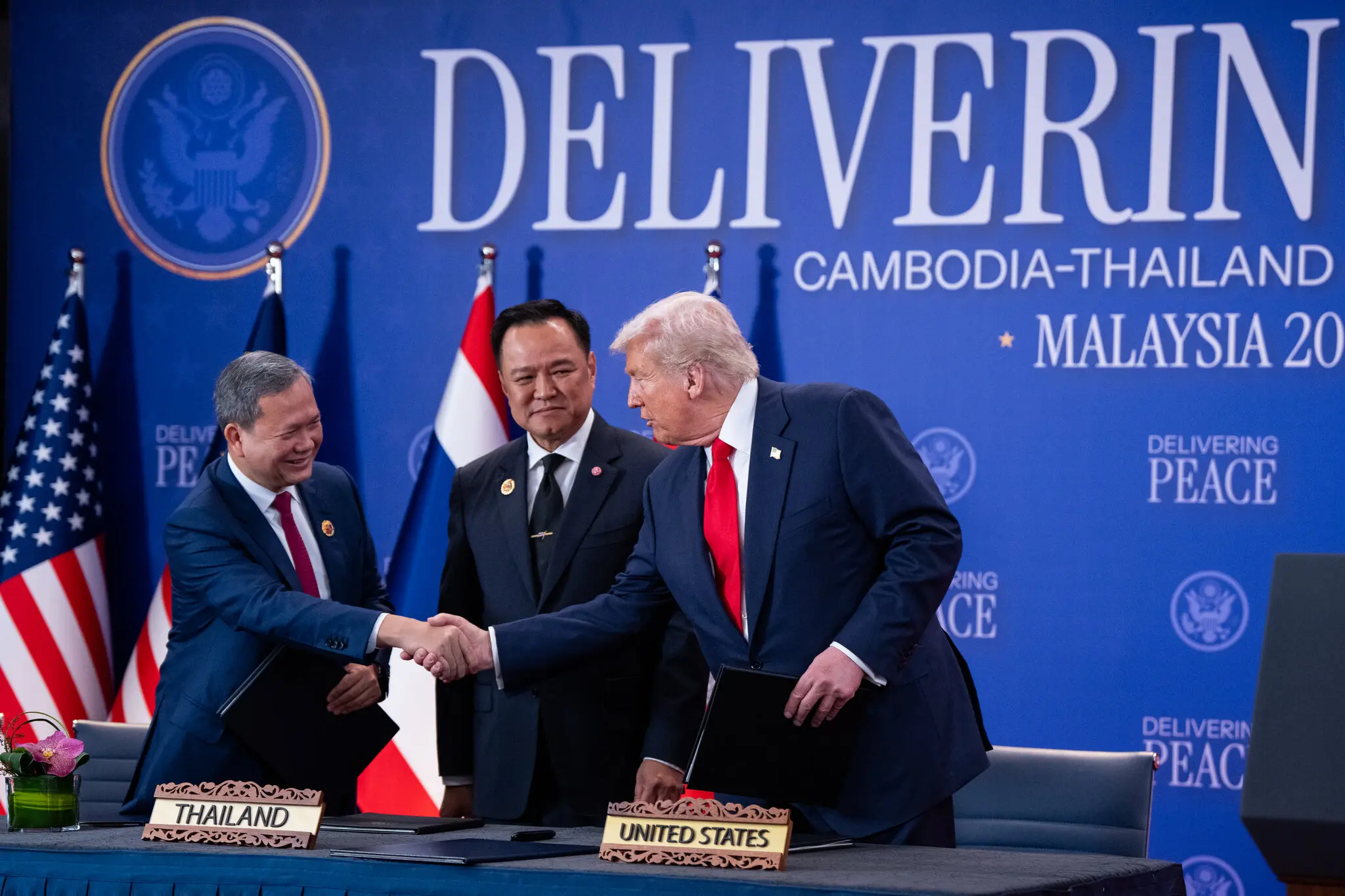
Meanwhile, Thailand and Cambodia signed an expanded ceasefire agreement in a historic moment witnessed by U.S. officials. Trump described it as “a model of peace through prosperity.” The deal includes commitments to withdraw heavy weapons from disputed borders. It also includes cooperation on de-mining projects that have endangered civilians for decades.
A Message to Beijing Before Meeting Xi
Analysts say Trump’s timing is no coincidence. The agreements come just days before his planned meeting with Chinese President Xi Jinping in Seoul, a session expected to focus on tariffs, technology exports, and security in the South China Sea.
“Trump is clearly building leverage before sitting down with Xi,” said Dr. Lian Tan, an international relations expert based in Singapore. “By locking in support from Southeast Asia, he’s showing that Washington still has influence beyond traditional alliances like Japan and South Korea.”
Trump Asia Trade Deals: Why This Matters for Global Markets
These new deals mark a decisive return to trade-pressure diplomacy. They use commerce and security as twin tools of influence. For Southeast Asian nations, the deals offer access to U.S. investment and markets. For America, they are a step toward reducing reliance on Chinese supply chains.
Economists believe the partnership could help reshape the global mineral trade. It may even create ripple effects for African suppliers, especially if the U.S. expands cooperation on rare-earth sourcing and green-energy materials.
Peace as a Political Strategy
The Thailand–Cambodia ceasefire is being hailed as Trump’s first major foreign policy success since leaving office. Both nations have long battled over border areas rich in historical and economic value.
The new truce—signed under U.S. and ASEAN observation—includes prisoner releases, joint patrols, and the reopening of trade checkpoints, potentially transforming the two rivals into trade partners.
“Peace brings prosperity,” Trump declared at the signing ceremony. “We’re not just talking about stopping bullets; we’re talking about starting business.”
Trump Asia Trade Deals: Asia Reacts
Reactions to the tour have been mixed.
Supporters call it a revival of American leadership, while critics question the long-term sustainability of agreements tied closely to Trump’s personal diplomacy style.
Still, markets across Asia responded positively. The Malaysian ringgit and Thai baht both saw mild gains against the dollar following the announcements.
“Whether you like him or not, Trump knows how to change the conversation,” noted a Jakarta-based analyst. “This tour forces both Beijing and Washington to rethink how influence is measured in Asia.”
What Comes Next
Trump’s next stops are Tokyo and Seoul. He will meet Japanese Prime Minister Fumio Kishida and South Korean President Yoon Suk Yeol. These meetings lead to the summit with Xi Jinping. Observers say the results could show if Trump’s momentum becomes lasting policy or just a flash of showmanship. For insights on maintaining strong financial strategies during uncertain times, see The Secret to Your Company’s Financial Health is Very Important.
Donald Trump’s Asia tour blends business, peace, and politics into one spectacle of strategy.
By connecting trade deals to ceasefires, and minerals to diplomacy, he’s reshaping not only how America engages with Asia—but also how power itself is negotiated in a post-pandemic, multipolar world.